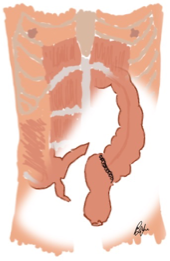
ColoRectal Resections

ColoRectal Resections

Highlights:

◆

The Robotic Advantage:

◆
Colon and rectal resections when done Robotically lead to shorter, easier recovery with smaller and fewer incisions than open or laparoscopic surgery. This is combined with an industry leading Early Recovery After Surgery (ERAS Program) resulting in patient outcomes in line with the best reported outcomes in the nation.

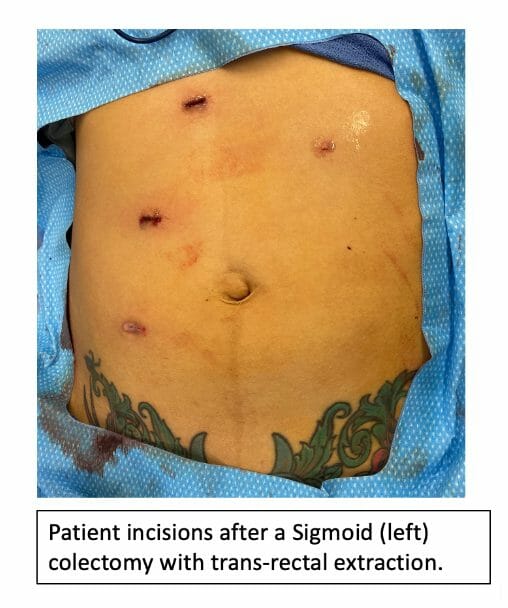
Natural orifice extraction of specimen

◆
Appropriate Colon and Rectal specimens can be extracted through the rectum (a natural orifice) saving the patient a 5-10 cm incision previously required with laparoscopic surgery, as well as nearly all all other robotic surgeons.
This is facilitated by Dr. Johnson’s ability to sew the bowel connection robotically.
End result is less pain and less potential for incisional complications such as infection and hernia (because there isn’t one)

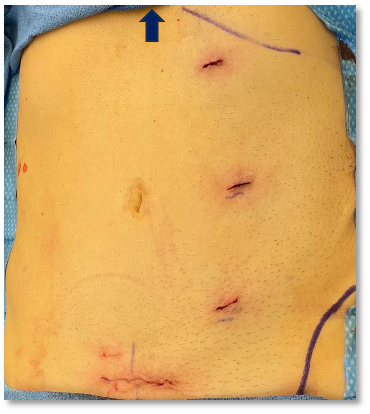
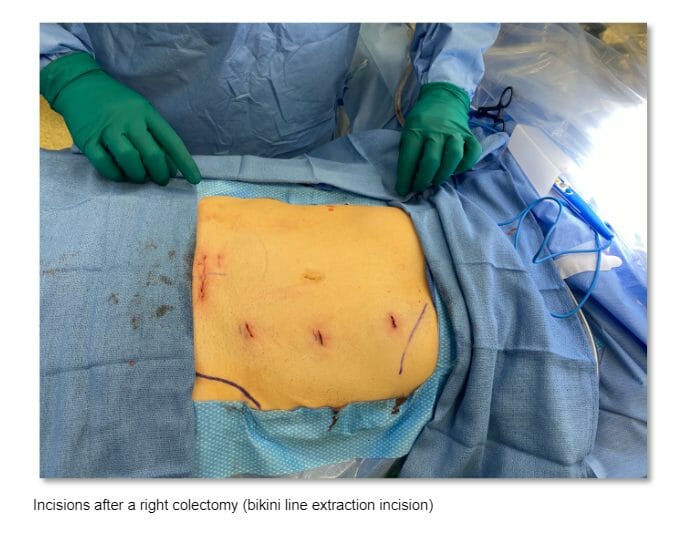
If an extraction incision is required, Dr. Johnson typically places this incision in the underwear line. This location hides this larger incision, when required, and places it in a location much less prone to developing a hernia in the incision.
Dr. Johnson’s Colon Resection Outcomes

◆
  • Complication rate below national average
    • Avoiding complications gets you back to life faster. 
    • This low complication rate is despite a patient population predicted to have higher complication rate (ASA 3+ 78%).
  • Length of stay in hospital and return of bowel function far superior to national averages, even for other robotic surgeons.
  • Unplanned ostomy rate in non-emergent surgeries under 2%
  • Oncologic outcomes with Lymph Node harvest and negative surgical cancer margin rate superior to national average. 
  • Book your consult today to discuss predicted statistics for your individual situation.

Dr. Johnson’s Robotic Advantage

◆
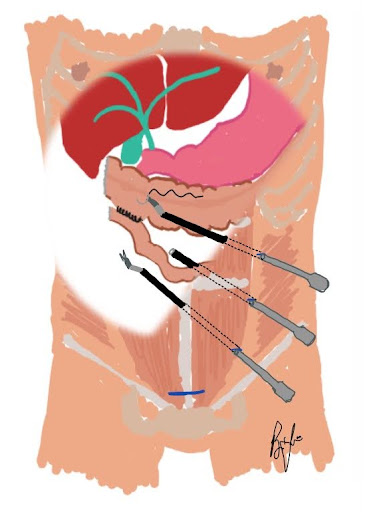
By utilizing the full capabilities of the Davinci Robot, Dr. Johnson can resect and sew back together your colon/rectum using robotic arms through 8mm incisions, and potentially even extract through the rectum.
We then add an advanced Early Recovery After Surgery (ERAS) Program that focuses on the all other aspects of Colorectal surgery recovery.
Together these are all crucial in the recovery process, allowing patients to ambulate/walk sooner, with less pain, take fewer narcotic pain medications, and take deep breaths.
Ultimately this modern approach to colorectal surgery leads to less complications, shorter stay in the hospital, and gets you back to your life, faster.

Avoiding Colostomy/Ostomy

◆
Many patients fear having a colostomy bag after Colorectal surgery. Rest assured Dr. Johnson will give you the best chance at avoiding this, unless necessitated for your safety.
An ostomy is done when the surgeon feels a connection is too risky, and the bowel is diverted to the skin level, and an ostomy bag is stuck onto the skin around diverted bowel to collect your stool.
In scheduled Colon or Rectal resections, Dr. Johnson’s rate of requiring an ostomy is less than 2-3%, and a majority of these patients are re-connected a few months later. This is accomplished with a very low leak rate from the bowel anastomosis (connection)
Dr. Johnson accomplishes this through utilizing robotic technology with tireless focus on surgical technique. Firefly technology (below) ensures proper blood flow to the bowel connection.

Intracorporal Anastomosis

◆
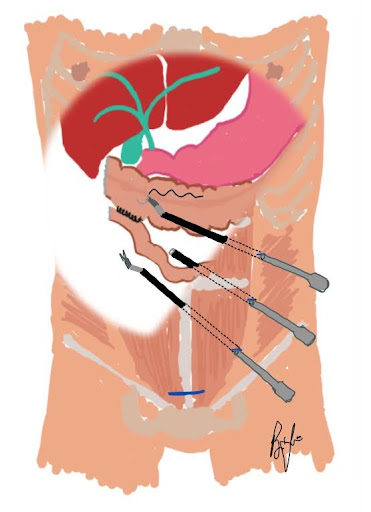
The dexterity of the robotic instruments allows Dr. Johnson to sew in a similar fashion to open surgery. This allows re-connecting (bowel anastomosis) without exteriorizing bowel or using bowel staplers.
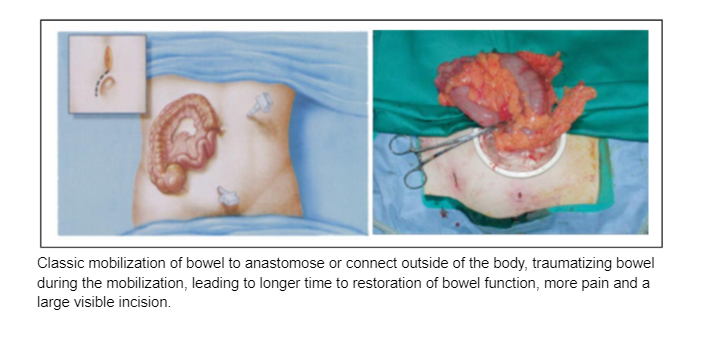
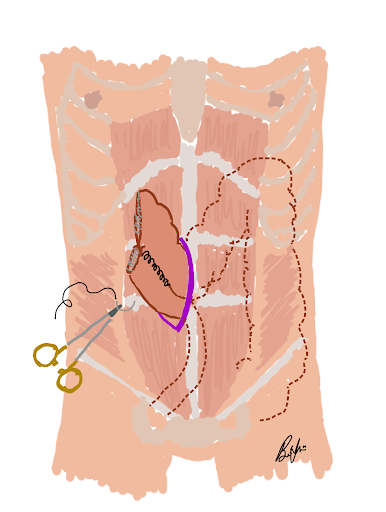
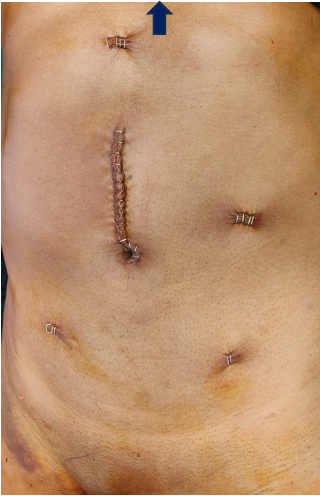
Typically in laparoscopic surgery, an additional bowel is dissected free, brought out of an incision in the mid abdomen, connected outside of the body (extra-corporal), and put back into the abdomen.
These newer Robotic techniques avoid tissue trauma to the bowel, leading to faster recovery of bowel function.
Most of Dr. Johnson’s patients see return of bowel function within 1-2 days of surgery, leading to the average hospital stay after colon or rectal surgery of 2.3 days post-op.
In the past these types of connections have had higher leak rates, but by ensuring no tension on connections, proper blood flow at connection, proper nutrition, and sewing of bowel rather than using staplers, you can avoid an ostomy, and benefit from an exceptionally low leak rate
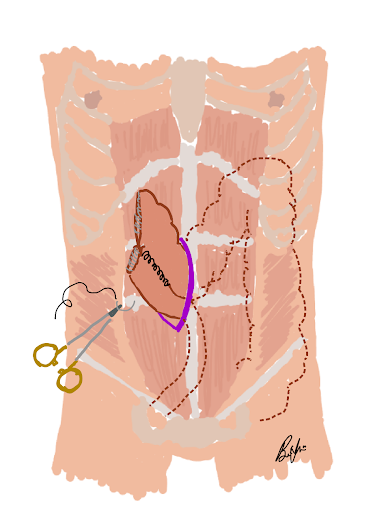
Laparoscopic Right colon Extra-corporal anastomosis (Connection outside the body)
unnamed 5
unnamed 6
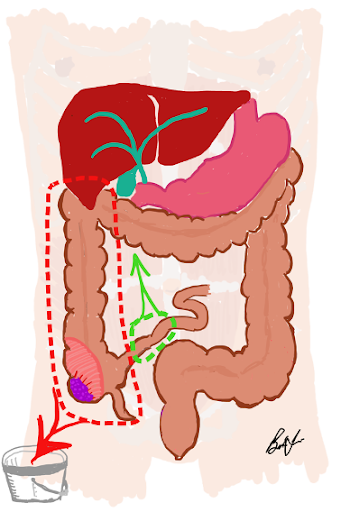
Right colon resection (with need of a connection)
Robotic Right colon intracorporal anastomosis (Connection Inside the body)
unnamed 3

Example of laparoscopic vs Robotic Right Colon Incisions
◆
unnamed 7
unnamed 10
unnamed 9
unnamed 8
unnamed 4
unnamed 11
unnamed 12

Ostomy Reversal

◆

If you currently have an ostomy, Robotic ostomy reversal is a great option.
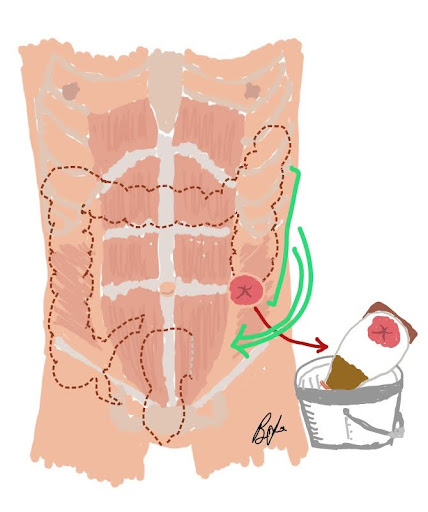
The vision and dexterity of the robotic instruments shine in narrow spaces such as the pelvis where anastomosis typically occurs.
Many patients that have a colostomy from emergent or open surgeries at other hospitals, are referred by their surgeons to Dr. Johnson to re-connect their bowel safely and with the least recovery possible.
unnamed 6 1
unnamed 13

Ostomy Reversal

◆
Firefly utilizes Indocyanine green (ICG), a chemical that refracts in wavelength the human eye can’t see, but the robotic camera can, even through multiple layers of tissue.

Dr. Johnson has done research on this molecule during his residency allowing him to gain the full utility of this technology.

Firefly Tissue perfusion showing
reduced blood flow at area of colon
planned for anastomosis (connection)
This must be resected further to prevent leak

The ureter (carries urine to bladder) visualized here with Firefly, can be pulled to the colon by diverticular inflammation or a tumor. Firefly makes this structure easily identified, preventing un-necessary dissection.

Advanced ERAS (Early Recovery After Surgery) Protocols
◆
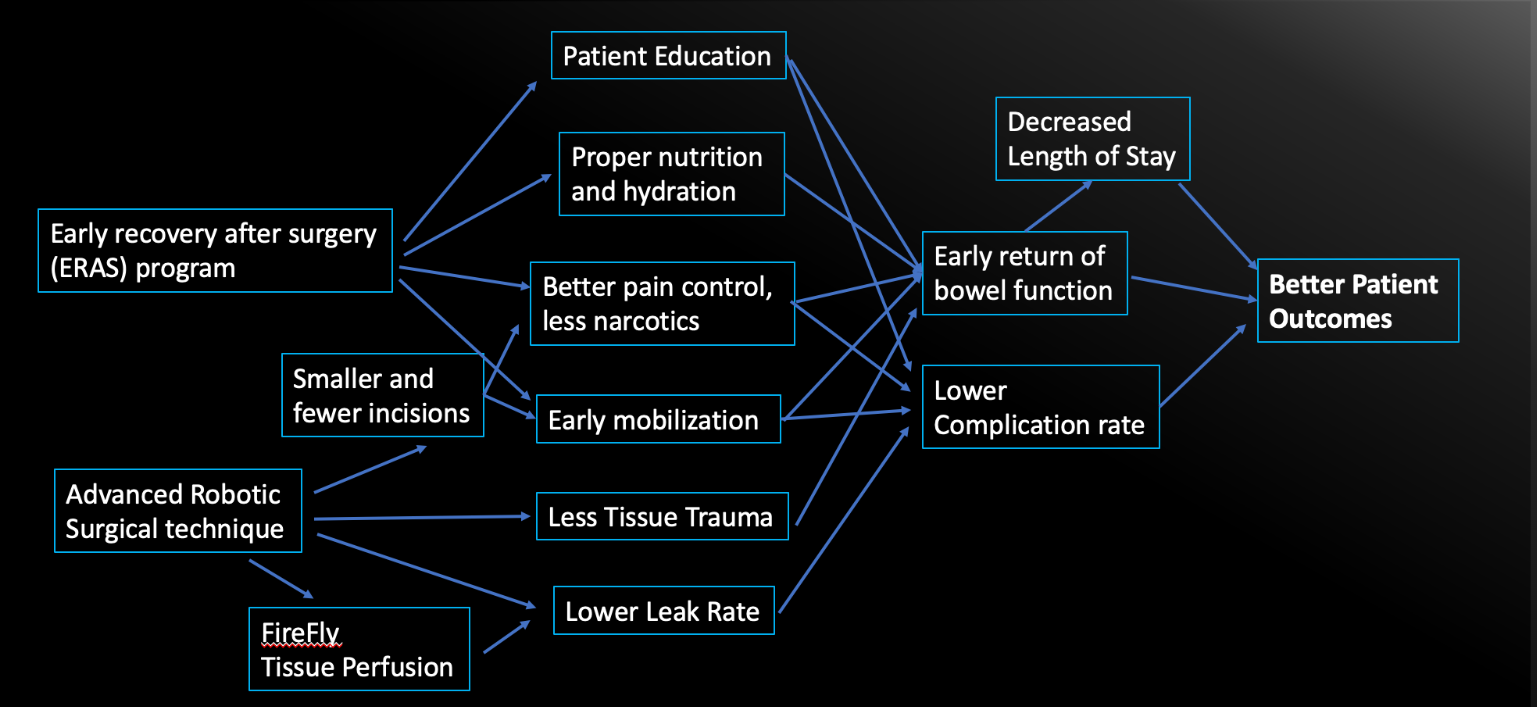
Improving outcomes of Colorectal Surgery is multifaceted. This program focuses on reducing complications and getting back to your life based on evaluation of evidence based medicine across all aspects of colon surgery.
ERAS standardizes the pain regimen, blood clot prevention, methods for avoiding infections, nutrition, early walking and several other data driven aspects of care before, during and after surgery.
Dr. Johnson has led the adoption of this program across his hospital system.
The ERAS program starts during the Pre-op clinic visit with informational packets and consultation given to patients, so patients know what to expect.
There is even a grant for to provide free Pre-op nutritional supplements to qualifying patients, and a plan for early feeding with liquids the same day of surgery
Non-narcotic pain regimen and anticoagulation begins in pre-op to prevent pain and complications through non-opioid analgesics and Anesthesia ultrasound guided pain blocks
Combining this program with optimal surgical techniques lead to the outcomes shown.
iff

What to Expect

◆

What to Expect: Clinic visit

It is normal to be scared with the idea of surgery. Patients report feeling much better after their clinic appointment.
Before Clinic write down questions, bring relevant health records from out-of-network facilities. Review med list.
Discuss Goals, concerns and questions
Discuss treatment options with expected timelines and predicted outcomes statistics based on Dr. Johnson’s expertise and individual outcomes data.

Pre-habilitation and testing

Improve your outcomes by optimizing your health before surgery
Smoking Cessation – quitting nicotine products 4 weeks prior to surgery reduces risk of complications
Nutrition – even with cancer diagnoses, your body needs the nutrients to heal, which has been proven to reduce recovery times. Reduce processed foods and sugars. If you cannot afford proper nutrition, Dr. Johnson’s team has a grant to provide that for you.
Weight – BMI <35 associated with decreased complications
Diabetic control – A1C <7.5

Pre-Op

You will meet with Dr. Johnson, the anesthesiologist and surgery team in the pre-operative area.
We will go over final questions and expectations including timeline.
Your family can be with you at this time.
Pre-operative pain management to get ahead of the pain.

Surgery

This is the nerve-wracking portion for every patient. Rest assured, you are in the best hands.
Family will be updated during the surgery if we need to take more time than is predicted.
Every patient is different inside and out. Safety and surgical outcome are the primary concern.

Recovery Room

You will be closely monitored coming out of anesthesia.
Family updated on surgical findings.
Pain control

Admission to Hospital

Early Recovery After Surgery (ERAS) protocols followed
Clear liquids day of surgery
Up out of bed day of surgery or at latest day after surgery.

Work toward discharge goals:

– Return of bowel function (passing flatus/gas and have a bowel movement. 

– Acceptable pain control at rest and walking

– Tolerating general diet

Home Recovery First 2 weeks

This is your time to heal and recover. 

Dr. Johnson recommends taking 2 weeks off work for recovery of colon surgery. 

No lifting more than 15 pounds to prevent hernias

Walking, stairs and low impact activities are encouraged

Avoid irritating foods such as spicy or fried foods as well as raw, stringy vegetables (list of such foods provided)
Stool softeners to counteract constipation from narcotic pain meds (if using)

Home Recovery Weeks 3-4

No lifting more than 30 pounds or focused abdominal exercises.
Return to work with weight restriction
Completely normal diet unless instructed otherwise
Off of pain medications.
Bowel function should be normal.
Dr. Benjamin Johnson

Specializing in Robotic Surgery Services in Chicago

Dr. Johnson’s Commitment to treating the whole patient, top surgical skills, and recovery programs have led to proven excellent outcomes with Robotic Surgery.

Specializing in Robotic Surgery In Chicago  

Dr. Johnson’s Commitment to treating the whole patient, top surgical skills, and recovery programs have led to proven excellent outcomes with Robotic Surgery.